Emergency Exit Signs and Photoluminescent Signage: Rules and Best Practice
Updated: November 2026 2 min readBy the Vinsafe fire safety team
Quick guide to fire exit signage: When power fails and smoke fills a corridor, exit signs guide people out. Lit vs photoluminescent signs and where to put them.
In a fire, power often fails and smoke fills corridors within minutes. People who don't know the building lose their way. Emergency lighting and exit signage are among the cheapest measures, yet they decide whether people find the exit.
Types of exit signage
Electrically lit (maintained) signs stay lit all the time and switch to battery backup during power failure. They need regular battery testing.
Photoluminescent signs absorb normal light and glow in the dark when power fails. They need no wiring or batteries and have very low maintenance costs.
Where signs are needed
- Above every exit door and final exit
- At every change in direction along escape routes
- Staircase landings with floor numbers
- Near extinguishers, call points and fire equipment
- Assembly point outside the building
Low-level wayfinding
Smoke rises, so signs mounted high can disappear first. Photoluminescent strips at floor or skirting level, on stair nosings and handrails, help people find their way while crouching below smoke. This is especially valuable in hotels, hospitals, malls and high-rise buildings.
Emergency lighting
Escape routes, staircases, exits and plant rooms need emergency lighting that switches on automatically in a power failure. Test it by simulating a mains failure during your monthly checks.
Common mistakes
- Signs hidden behind decorations or signboards
- Exit signs pointing to locked doors
- Dead batteries in lit signs
- Faded, non-standard or wrongly placed stickers
Products mentioned in this guide

Photoluminescent Exit Signs
Photoluminescent Signage · Glows up to 12 hours after power loss
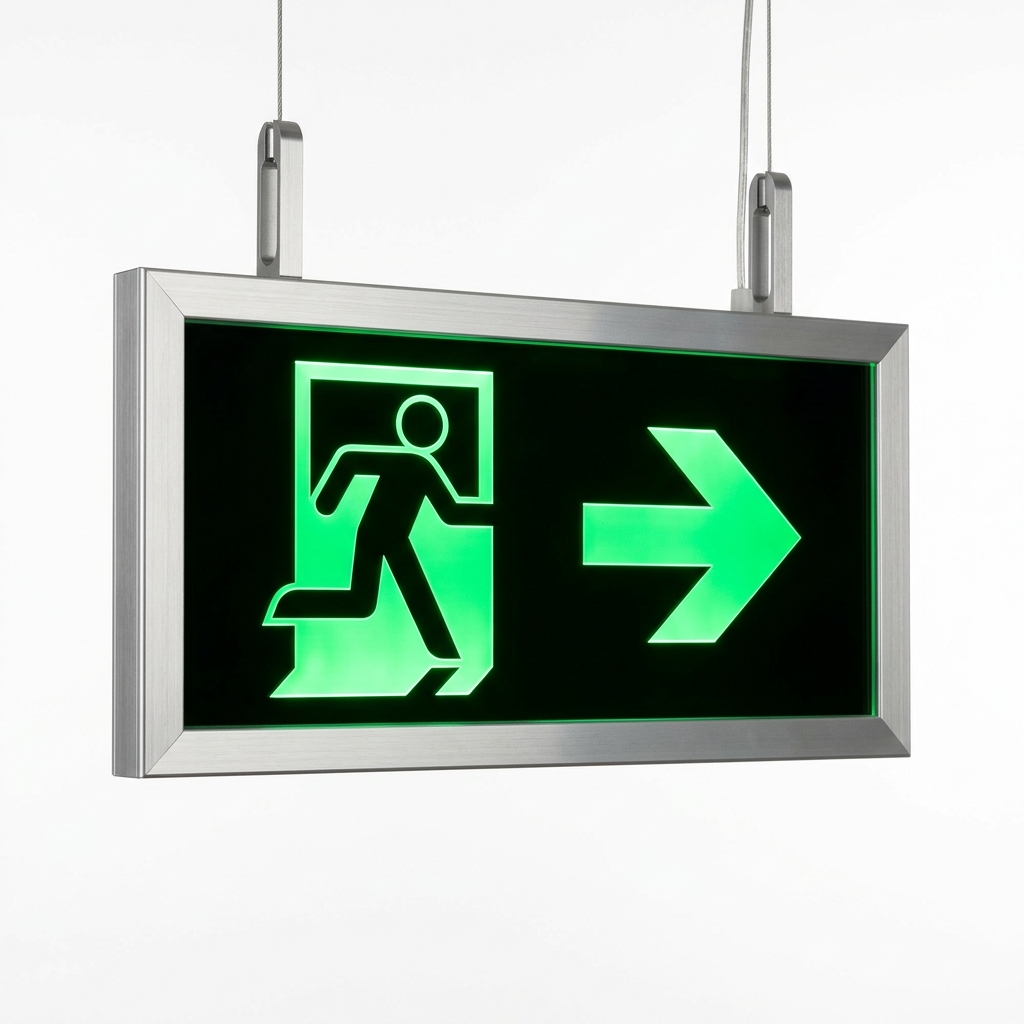
Edge-Lit Exit Sign Light Box
Emergency & Exit Lighting · Slim illuminated exit signage visible up to 30 m
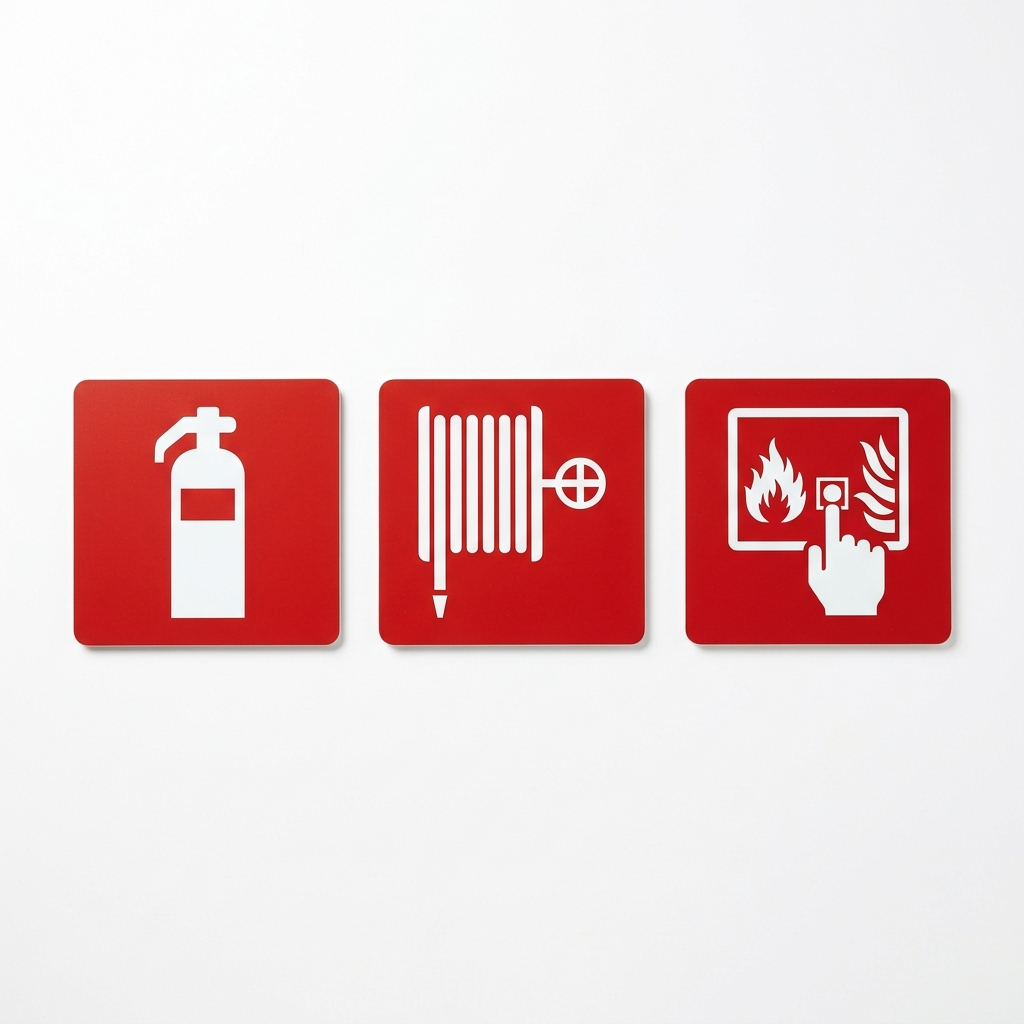
Fire Equipment Signs
Photoluminescent Signage · Locate extinguishers, hose reels and call points instantly
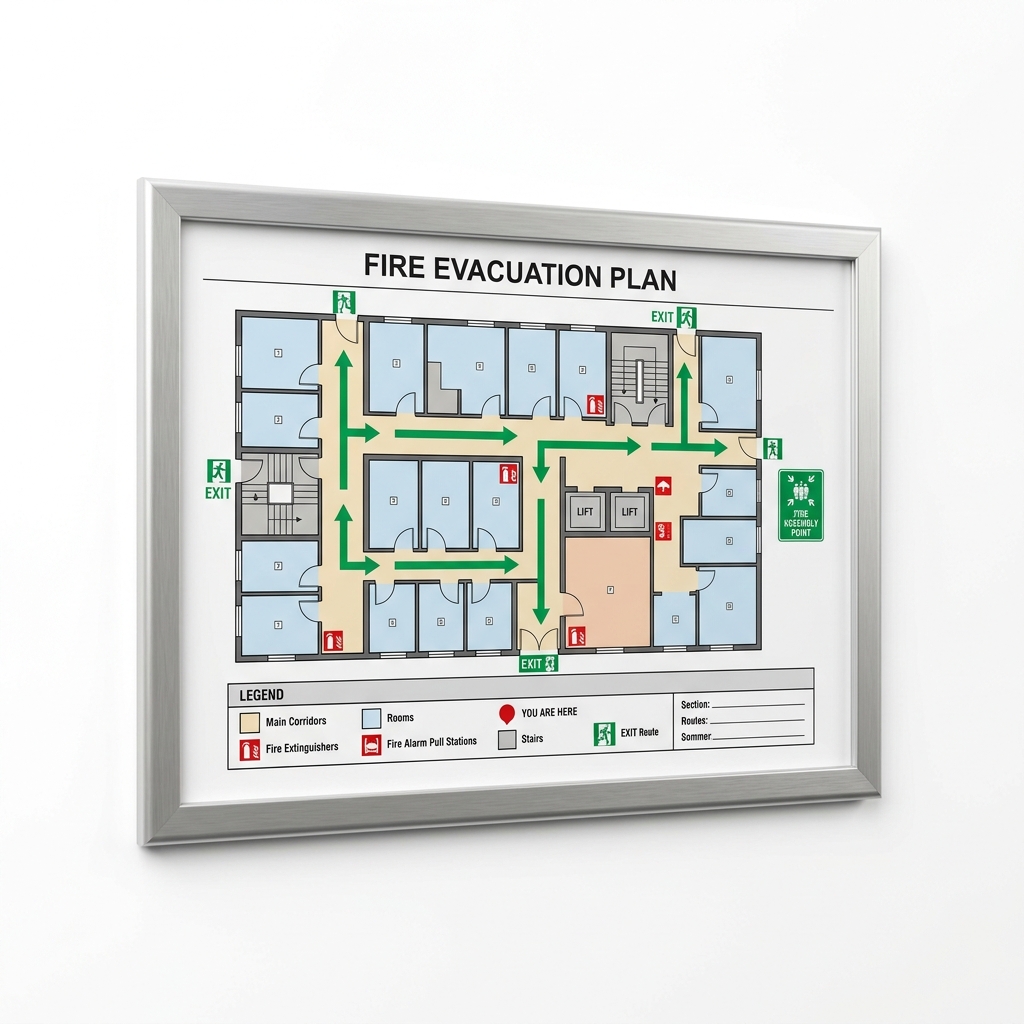
Evacuation Plan Boards
Photoluminescent Signage · Site-specific 'You are here' escape plans
FAQs